
House · MP AI
A persistence thesis to test: cover and freight may outlast the headlines, so attention and cost can diverge for months. No probability is supplied here.
The Casebook
Everyone is pricing the reopening. Who priced what the reopening does to us?
Fictional exercise · October 2026. Meridian and its people are invented; the conditions are the year’s, as reported.
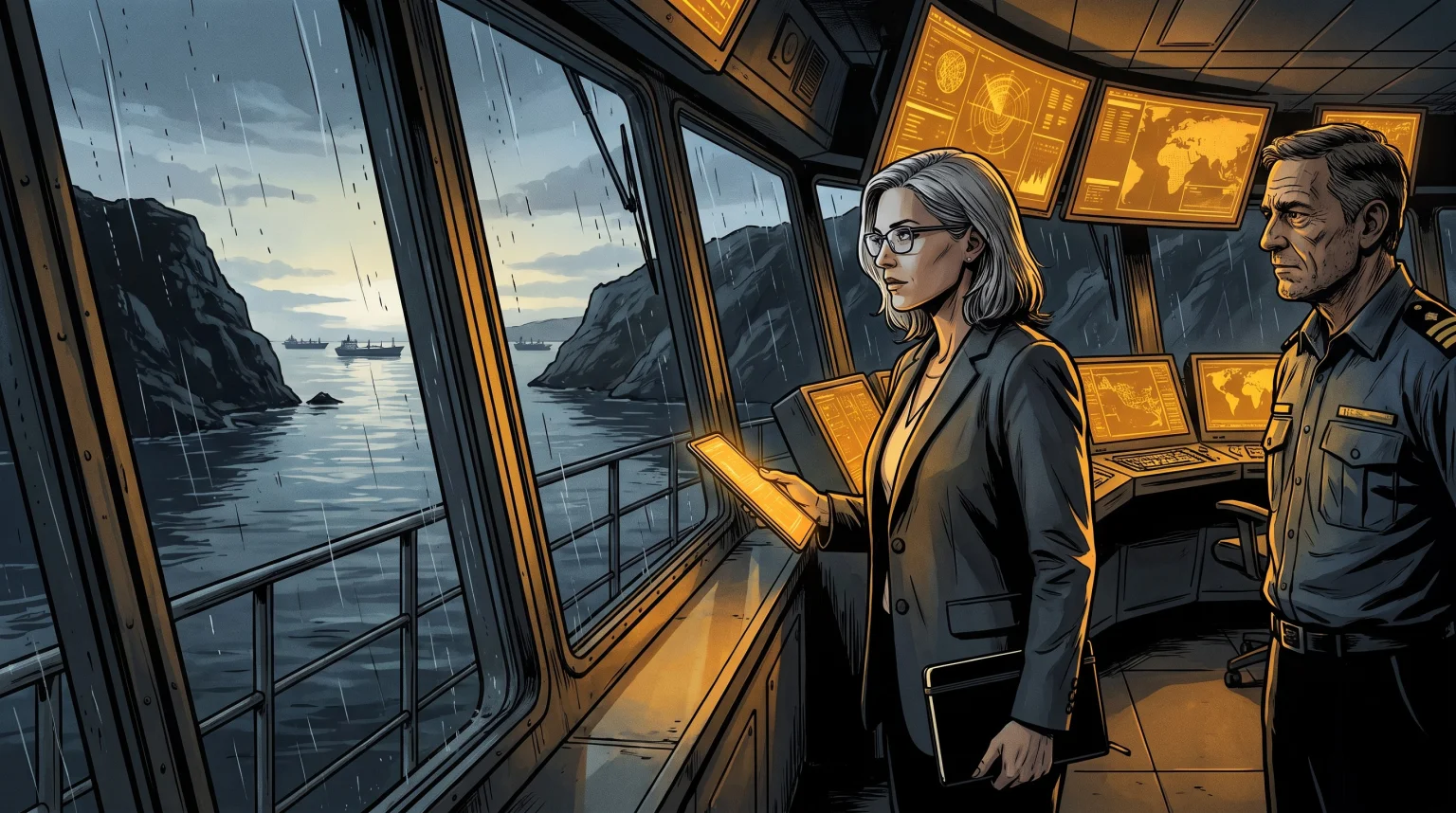
Chapter 1 · 00:00
Lena Voss, Meridian’s risk lead, opens a scheduled review in an extraordinary year. Her maintained question has an owner, a twelve-month US$ baseline and an exposure threshold. In May, month three of the closure, Meridian signed a twelve-month alternative-supply contract at a premium.
The Middle East and Energy dossiers hold the tracked questions the review leans on: whether the blockade of Iranian ports is lifted by December, and whether Brent ends the year above US$90. Meridian’s own overlay sits on that shared research without showing its baseline to anyone else.
Every assumption on Meridian’s map prices a long closure: the alternative supply, the buffer stock, the higher freight. The scheduled round asks what the map omits, and the answer is the direction nobody has drawn.
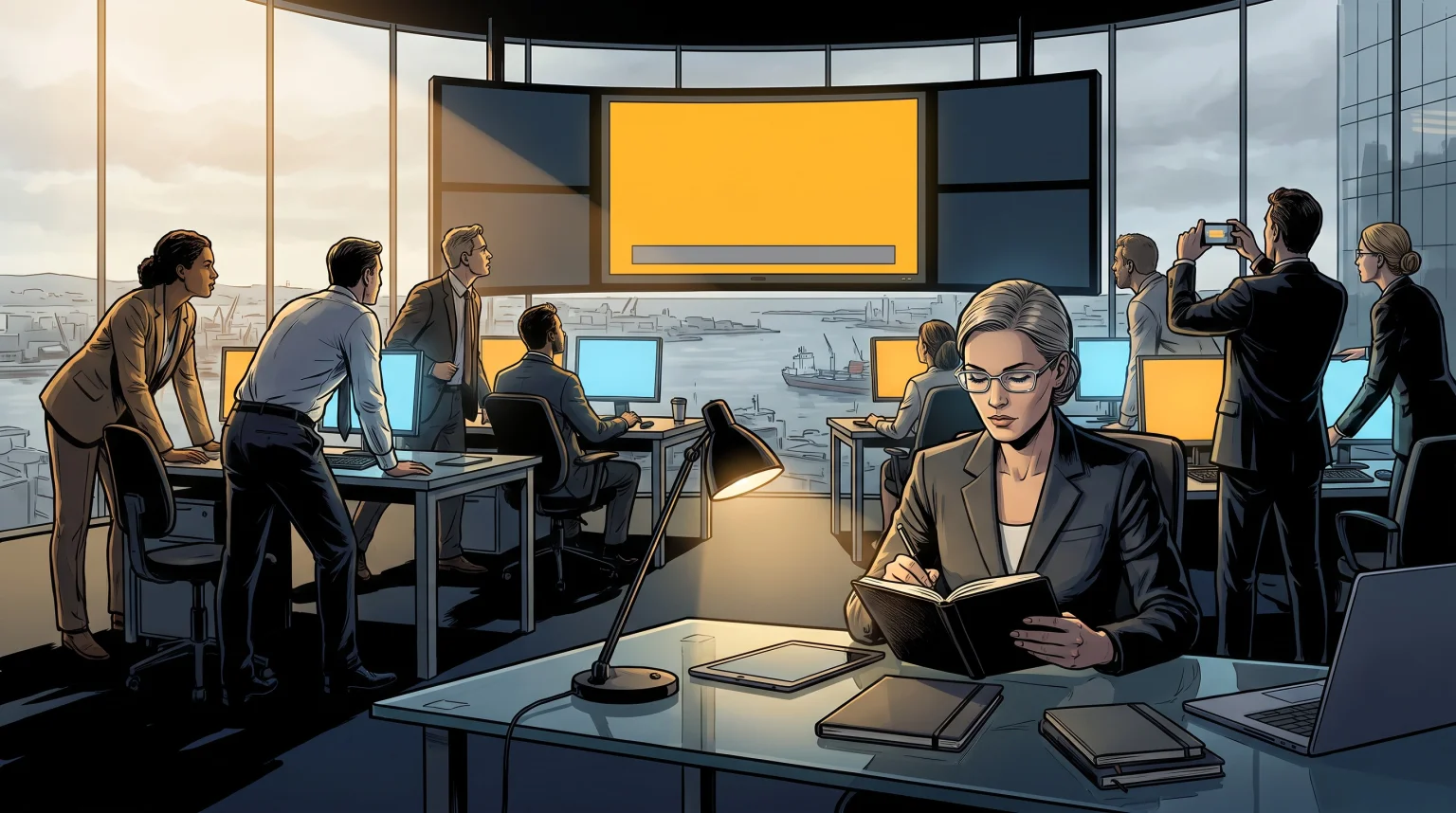
Chapter 2 · 00:30
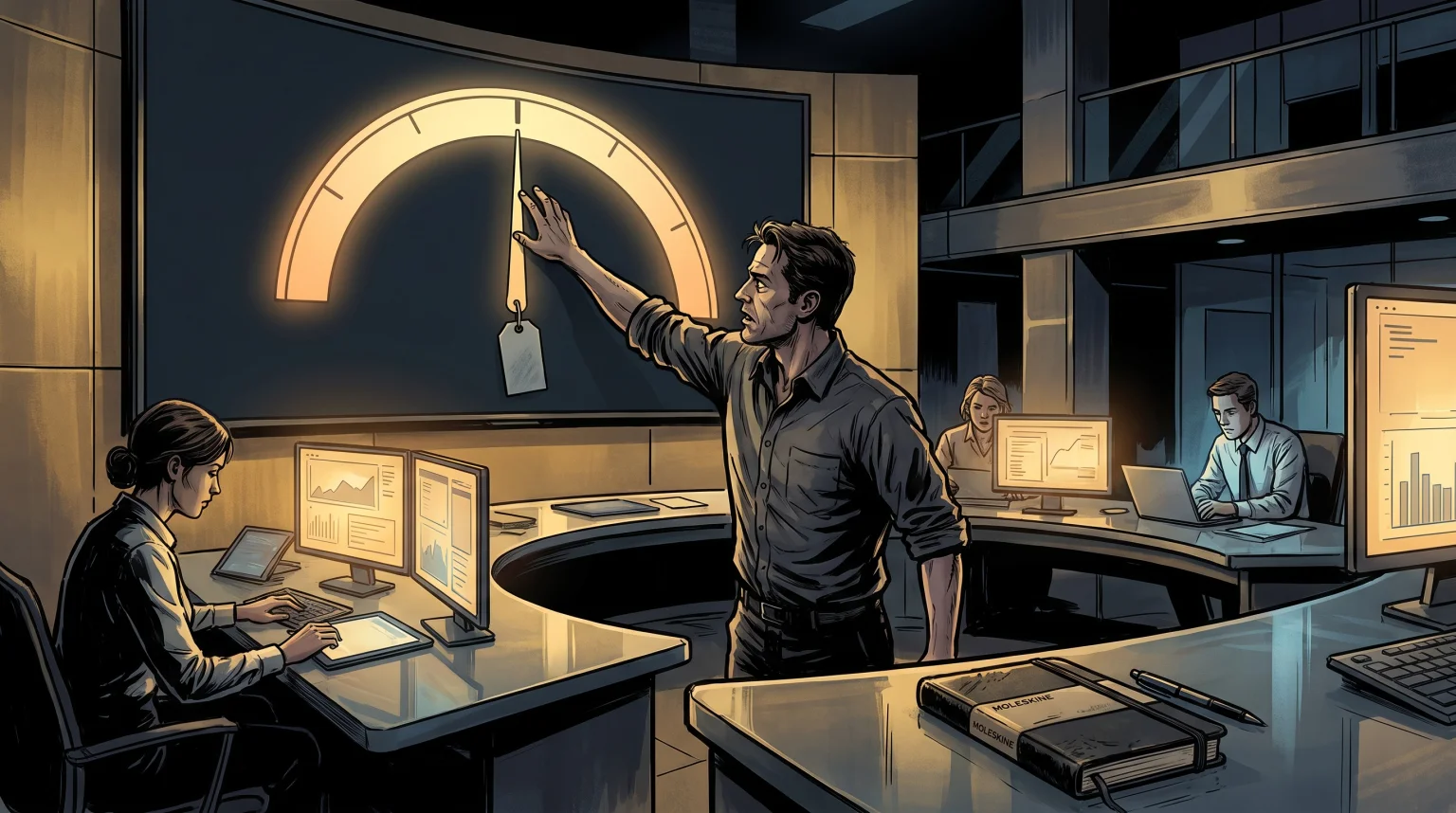
Mid-morning, a reported step toward lifting the blockade crosses every screen on the floor. In the story it has no published text and no confirmation, so the evidence trail keeps it as reported, with its source and its date, and does not promote it to fact.
The intended workflow wakes the maintained question when an event like this arrives; that event-driven reassessment is planned and was not run here. Lena brings the scheduled review forward by hand, and the new round states what changed since the last one.
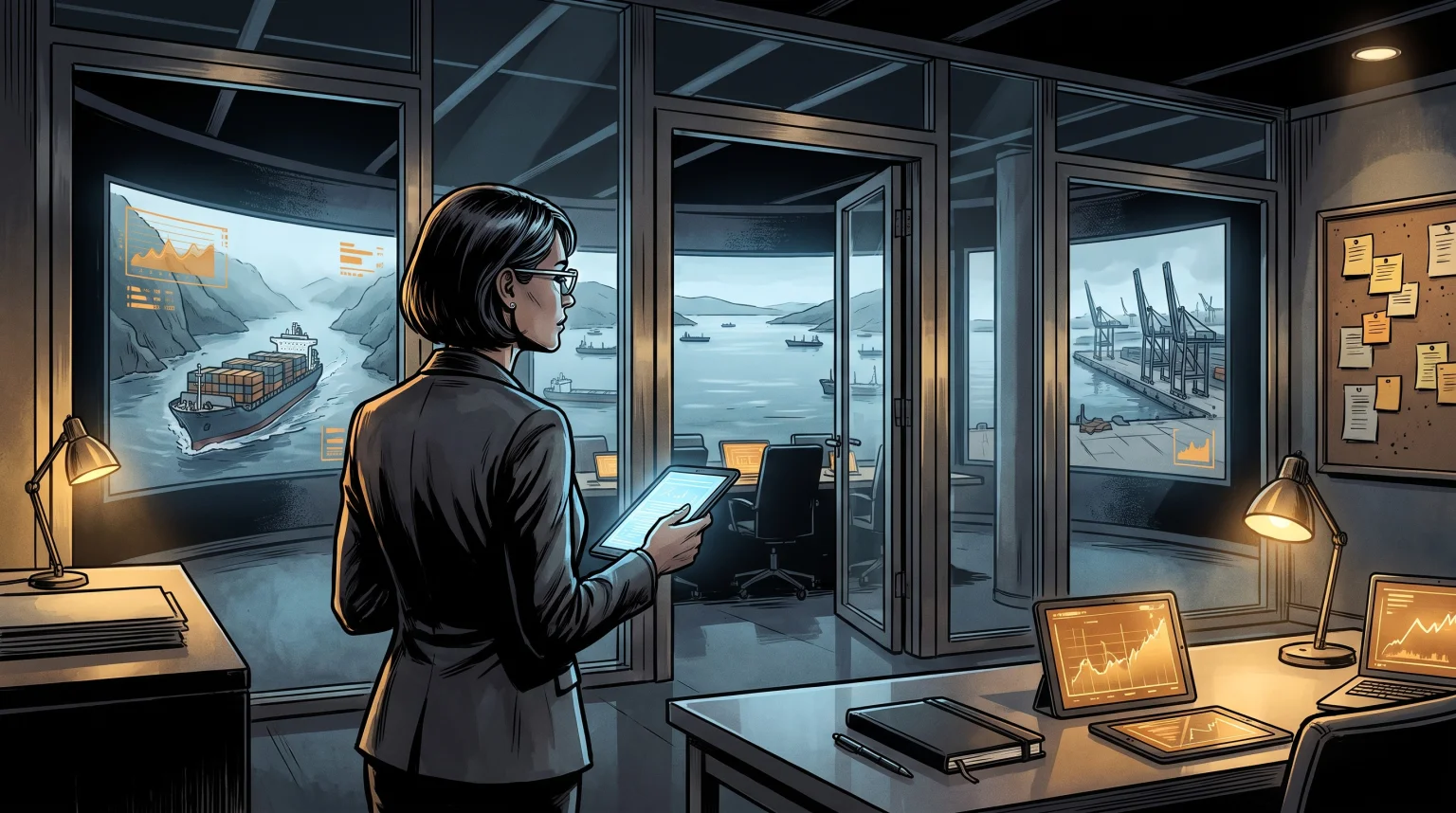
Chapter 3 · 00:50
The research view separates three paths: the closure persists; the blockade lifts and transits recover quickly; or the Strait reopens while war-risk cover stays near thirty times its pre-crisis level and transits return slowly. This treatment assigns no probability to any of them.
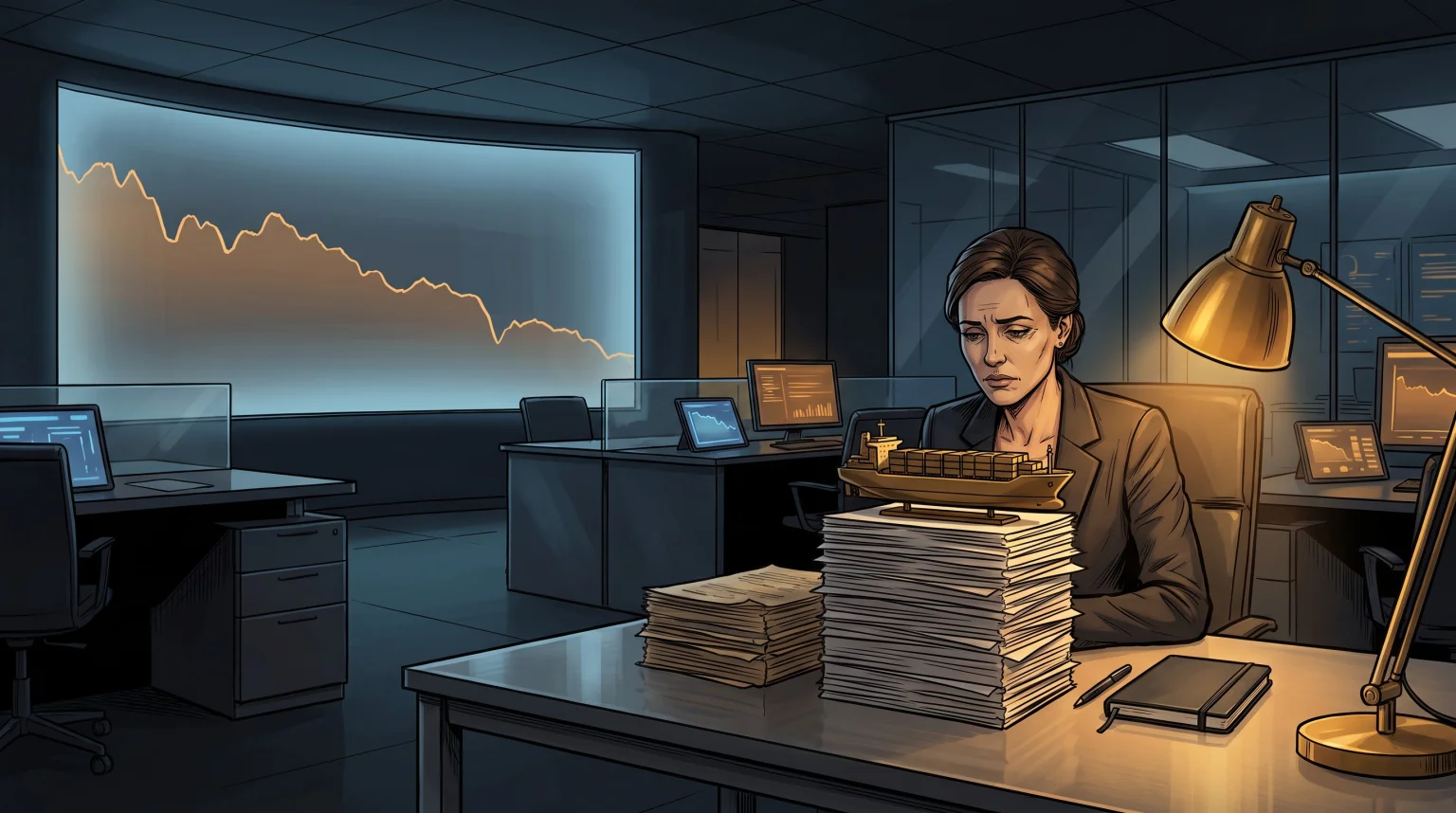
Lena writes the counter-case down. If the blockade lifts quickly, the May contract keeps charging its premium for supply Meridian no longer needs, while lead times and cover stay high for months. A Minority Report as a persisted object is planned; here it is written by hand.
In this exercise the Commons scenario on the blockade serves 0.51, on evidence dated in September. The platform marks the number as stale rather than pretend it is current, and the House and Market view shows the gap for what it is.

Chapter 4 · 01:20
Lena and the CFO put both paths on one assumed basis: US$100m of revenue, US$80m of costs and US$20m of earnings over twelve months. The calculation is explicit conditional arithmetic; it is not a simulation run and not an expected loss.
| Financial measure | Plan baseline | Closure persists | Reopening strands the contract | With a staged exit clause |
|---|---|---|---|---|
| Revenue | 100 | 90 | 100 | 100 |
| Operating costs | 80 | 74 | 80 | 80 |
| Premium on supply no longer needed | 0 | 0 | 3 | 3 |
| Cancellation charge | 0 | 0 | 1.5 | 0.5 |
| Operating earnings | 20 | 16 | 15.5 | 16.5 |
| Conditional earnings exposure | 0 | 4 | 4.5 | 3.5 |
If the closure persists, assumed revenue falls to US$90m and costs to US$74m, so earnings fall from US$20m to US$16m. The conditional exposure of US$4m runs through the inputs, and the May contract is doing the job it was signed for.
If the blockade lifts, revenue holds at US$100m, but costs carry the US$3m of premium already incurred under the May contract and a US$1.5m charge to exit it: earnings fall to US$15.5m, an exposure of US$4.5m. The number that matters is in the contract, not in the Strait.
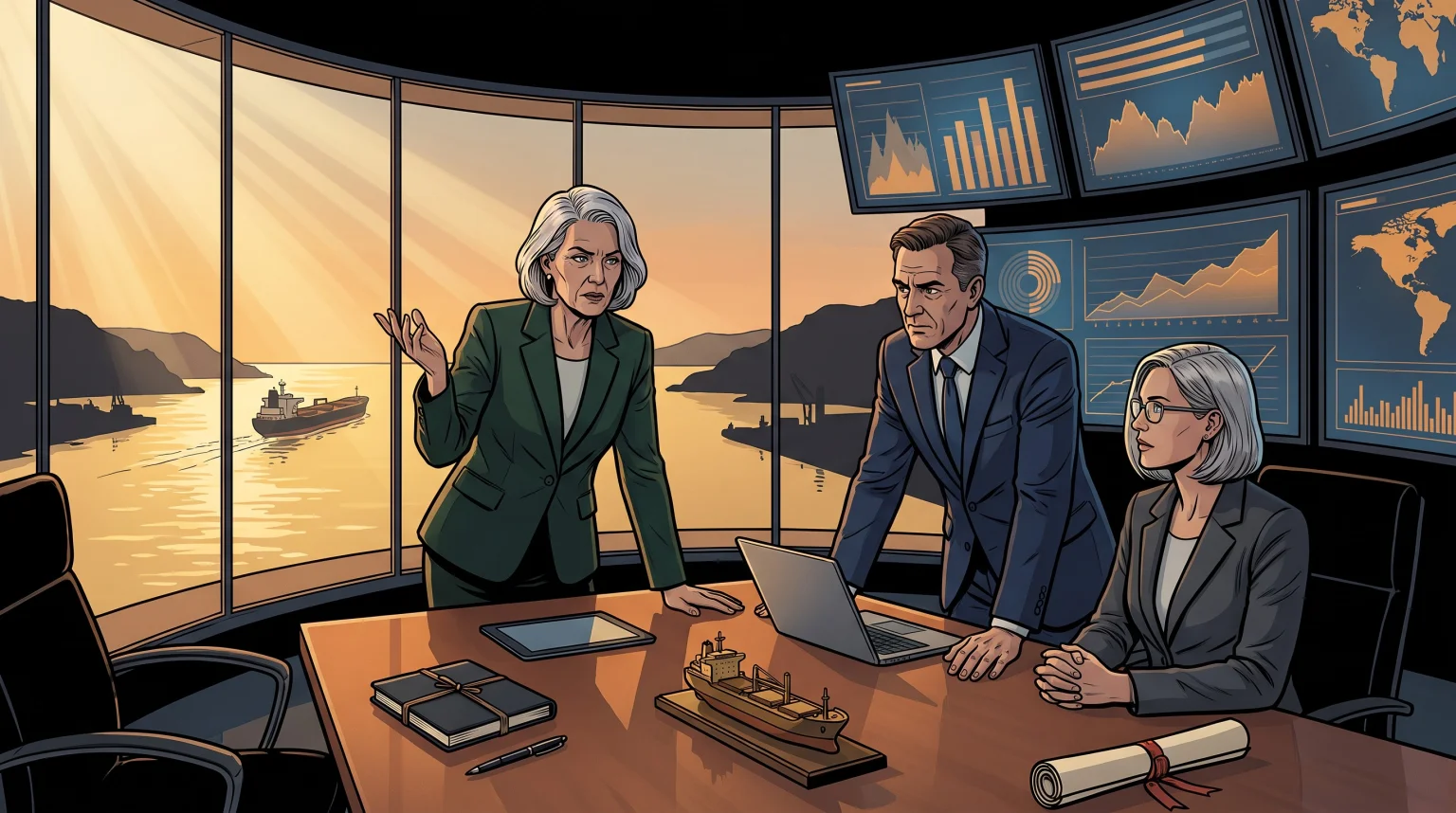
Chapter 5 · 01:50
Eleanor, the chair, turns the Board from the Strait to the contract the procurement director signed in May. The sensible decision of May has become the exposure of October, and nobody in the room owns it yet.
The foresight challenge explores how each actor moves if the blockade lifts: suppliers cut prices to win back volume, carriers restore routes slowly, insurers keep cover expensive. A Board challenge run by agents is planned; this one is led by people.
The staged option asks the supplier for an exit window with a smaller cancellation charge. If the charge falls from US$1.5m to US$0.5m, the second table’s exposure falls to US$3.5m, and the closure path stays covered.

Chapter 6 · 02:20
Management decides to seek the exit window. The record names the procurement director as owner, the conditions that would reopen the decision and the date of the next review. A decision is a dated record with an owner, not a slide.
Procurement must obtain the clause before the exposure is updated. Until the signed amendment and its actual cost arrive, the record shows the decision as approved and the exposure as unchanged.
The digest lists the open items: the amendment, its cost, the next reading of the blockade question and the cover terms at renewal. It decides nothing on its own; each item has a named owner.
When the next review opens, the risk map carries both directions, closure and reopening. New evidence may change the view, justify no change or leave the review overdue, and the record says which.

Hormuz · The research desk’s coda
For a research desk the question is not Meridian’s contract. It is whether Brent ends the year above US$90, and what an attention index misses about lasting cost.
Warflation, the platform’s public attention index, falls in a quiet week while freight and cover costs persist. Read alone it would say the risk is fading; read beside the cost series it says the headlines have moved on and the bill has not.
A research desk would set the House view against a market comparator on the same target and the same date, then challenge the thesis. The scored record keeps its misses beside its hits.
A persistence thesis to test: cover and freight may outlast the headlines, so attention and cost can diverge for months. No probability is supplied here.
No licensed, time-matched comparator is supplied in this exercise. Target, cutoff, liquidity and shared inputs must match before any divergence is shown.
This coda uses assumptions only. It imports no Meridian data, holdings or Corporate acceptance, and supplies no position, sizing, trade recommendation or backtest.
See this in House vs MarketTen fictional companies decide inside the year’s reported conditions. Each row names the twist and the capability it relies on, and opens the matching Solution pilot with that question already selected.
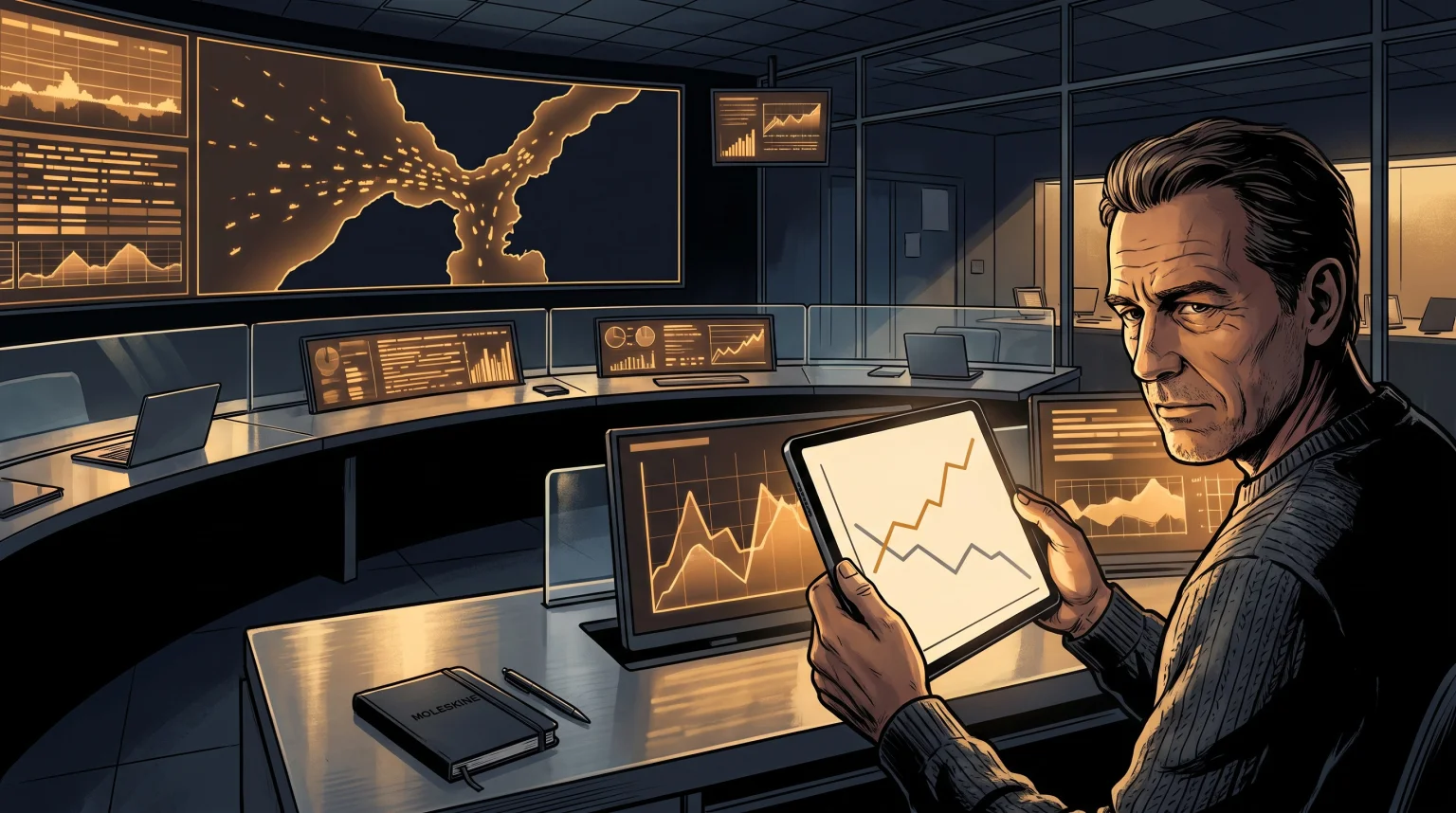
Operations director, a regional carrier · Hormuz
When transits recover, has delivery recovered?
Transit counts rise while war-risk cover stays near thirty times its pre-crisis level. Delivered lead times are the signal, not the headline.
Continuous anticipation
Head of procurement, a power-electronics maker · Critical minerals
Which input stops the line if one exporter’s flow goes to zero?
Gallium is a rounding error in cost and a total stop in supply. The exposure ranks inputs by stoppage, not by spend.
One financial basis

Chief risk officer, a turbine maker · Critical minerals
Is 10 November the date to plan for?
The reported expiry of the suspended controls fills the news. The April 2025 licences on seven heavy rare earths never paused, and they already bind.
Competing explanations
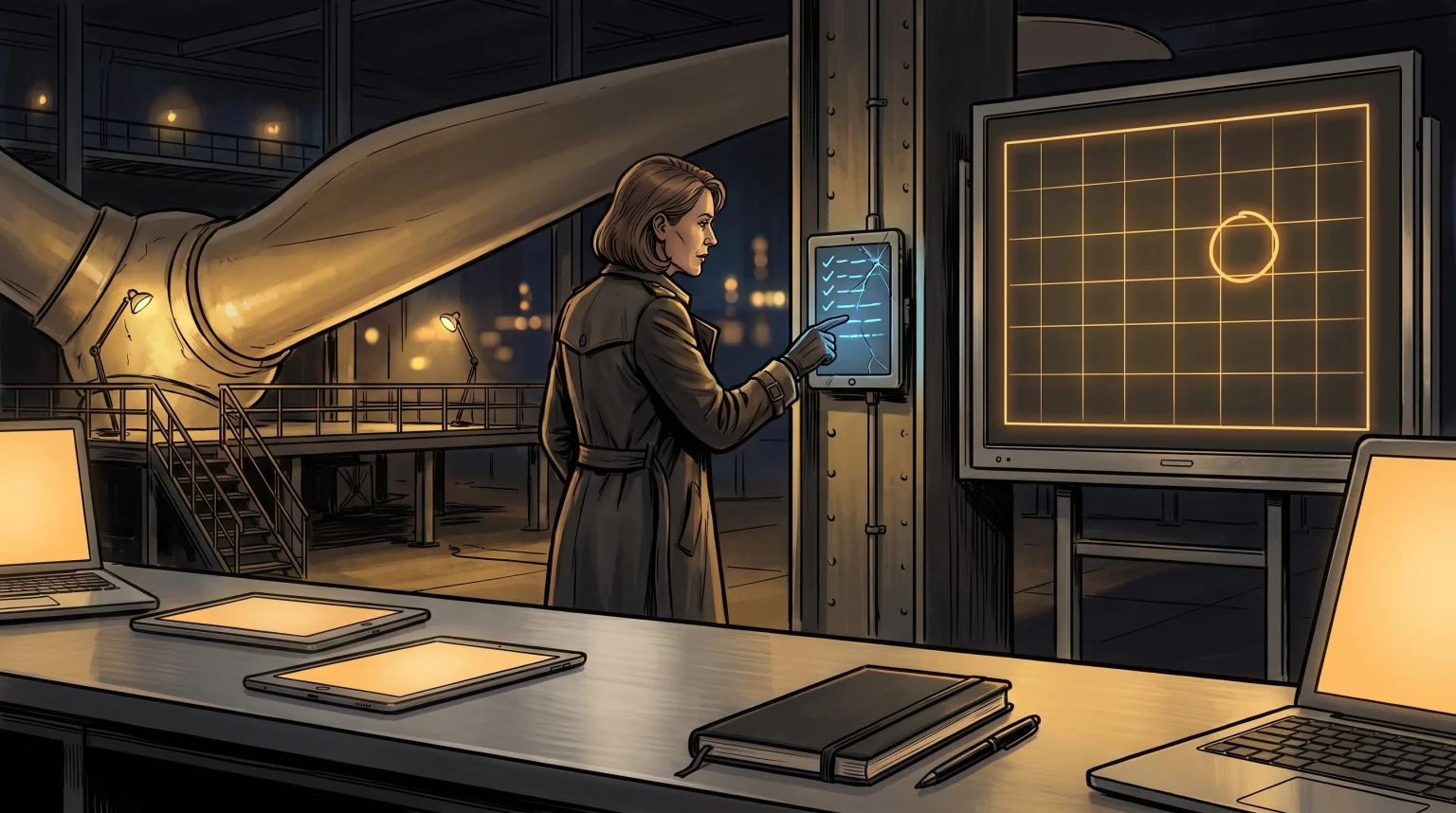
Chair, a magnet maker · Critical minerals
Can the Board rely on the January extension?
A reported extension with no legal text stays “reported” in the Board brief, with its source and its date, until the text exists.
Continuing review
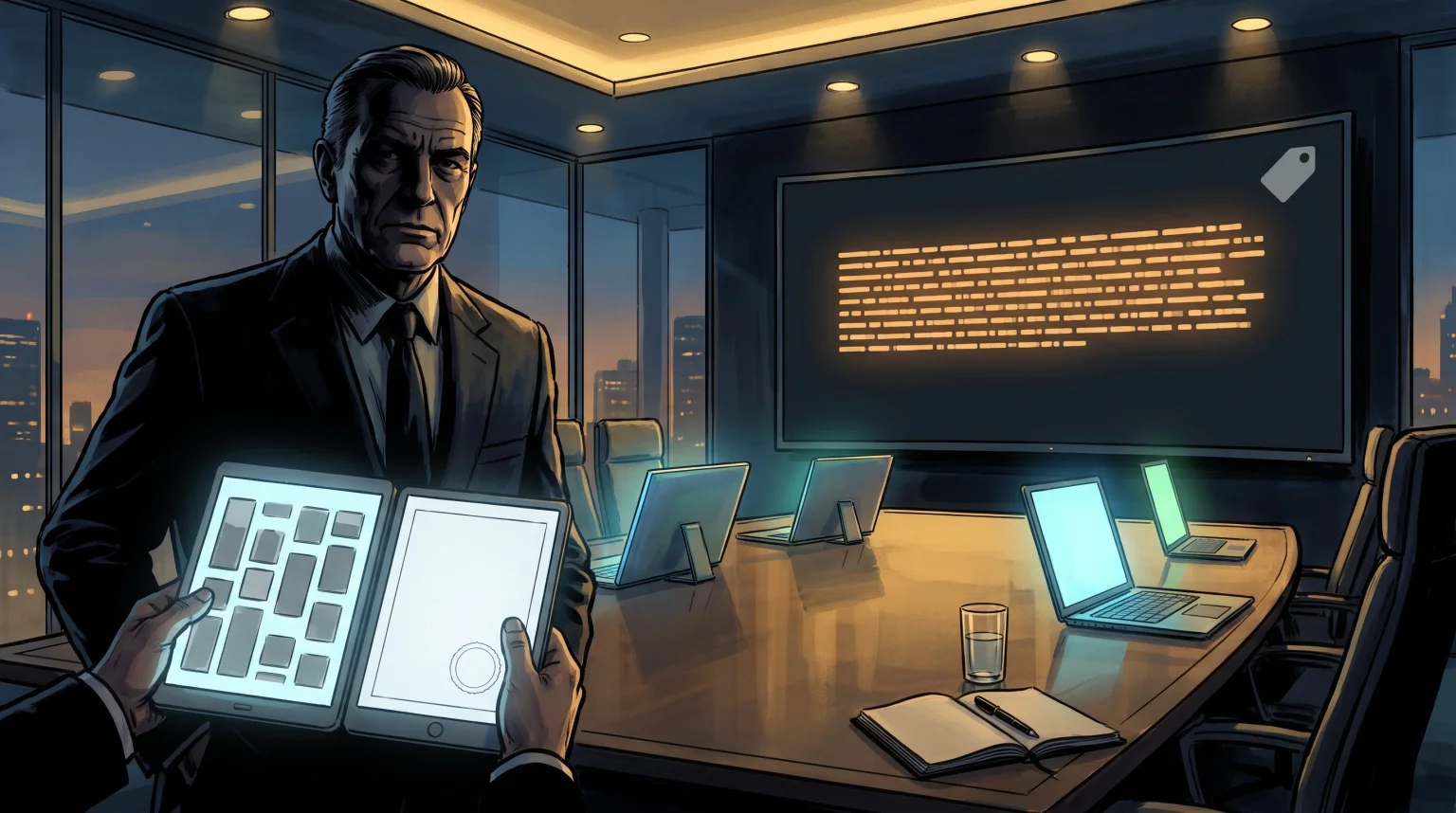
Risk committee, a specialty insurer · Hormuz
Where does cover concentrate when the market withdraws?
The common dependency is the single public reinsurance backstop behind cover, not any one insured.
One financial basis

Head of credit, a regional bank · Hormuz and oil
Which borrowers’ covenants tighten with Brent near US$108 and eight months of closure?
The borrower at risk is the one whose supplier reroutes, not the one on the route.
Continuous anticipation
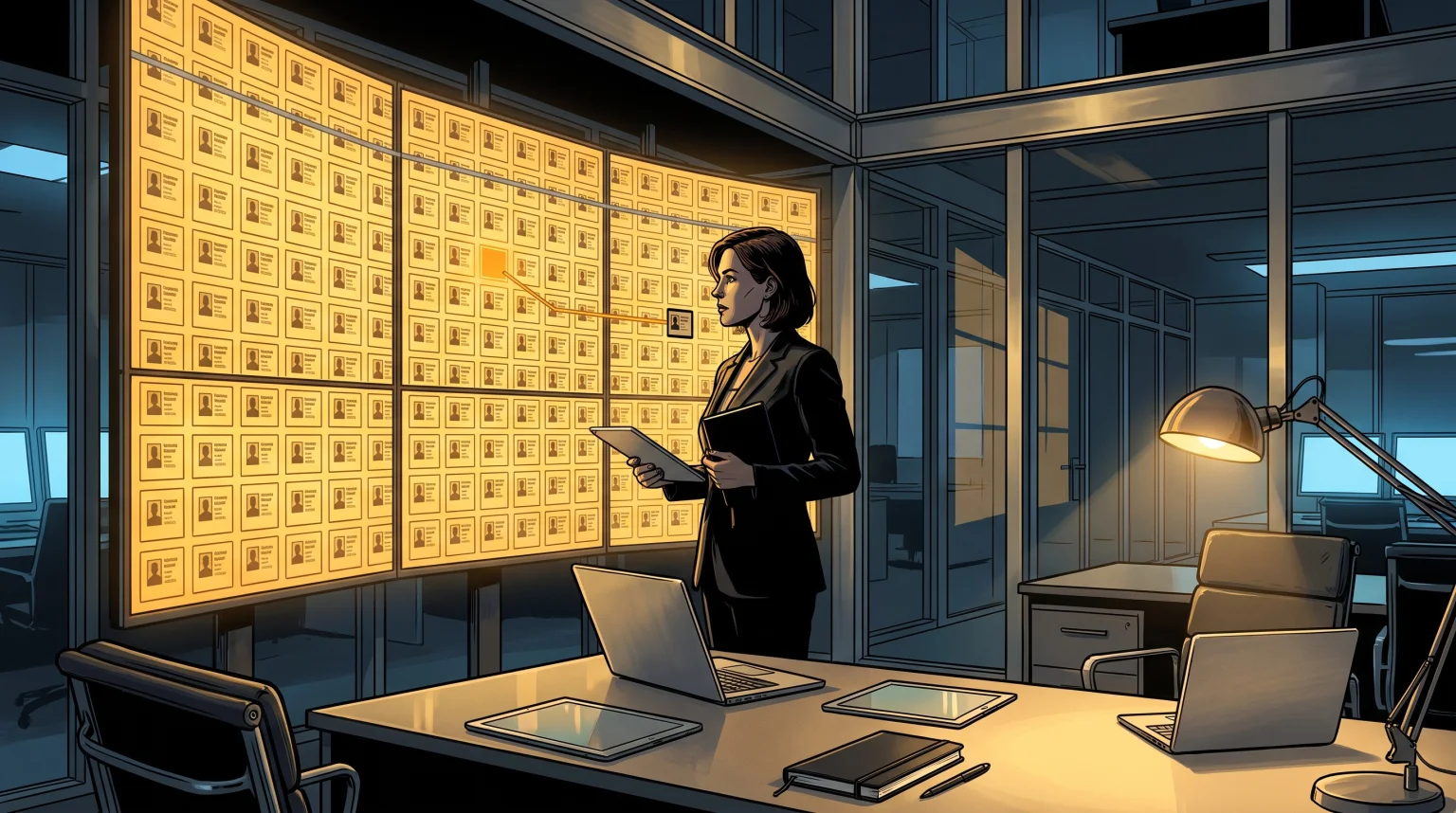
Head of research, a macro desk · Hormuz
Is the House/Market gap on “blockade lifted by December” an insight?
The published probability rests on September evidence. The gap is the age of that evidence, and the platform says so.
House vs Market
Chief investment officer, a multi-asset fund · Hormuz and oil
Can an attention index be a position signal?
Warflation measures attention. A quiet week lowers it while freight and cover costs persist: use it as one leg, not as a verdict.
Competing explanations
Portfolio manager, a technology fund · US–China technology
Is the export regime a ceiling or a sieve?
A filing says the market is foreclosed; the press says parts arrive regardless. The thesis challenge, human-led here, asks which source carries weight. US–China technology is not yet tracked: the dossier comes first.
Thesis challenge

Head of credit strategy, an asset manager · Fed and CPI
What if the Fed cuts in October and CPI prints 3.5% or above?
Each tracked scenario is benign alone. The joint is what hurts, and no probability is published for it.
One financial basis

Corporate Risk Intelligence
Connect the question to your company’s risk map, financial baseline, response choices and next operating or Board review.
Explore the Corporate offerInvestment Intelligence
Inspect scenario definitions, House/Market comparisons and substantive dissent, then test supported research retrieval or a bounded thesis challenge.
Explore the Investment offerRead first, test one supported request, evaluate a capped pilot, then consider recurring coverage. Scope, data rights, cost and service commitments are agreed before commissioning; these links start no paid work.